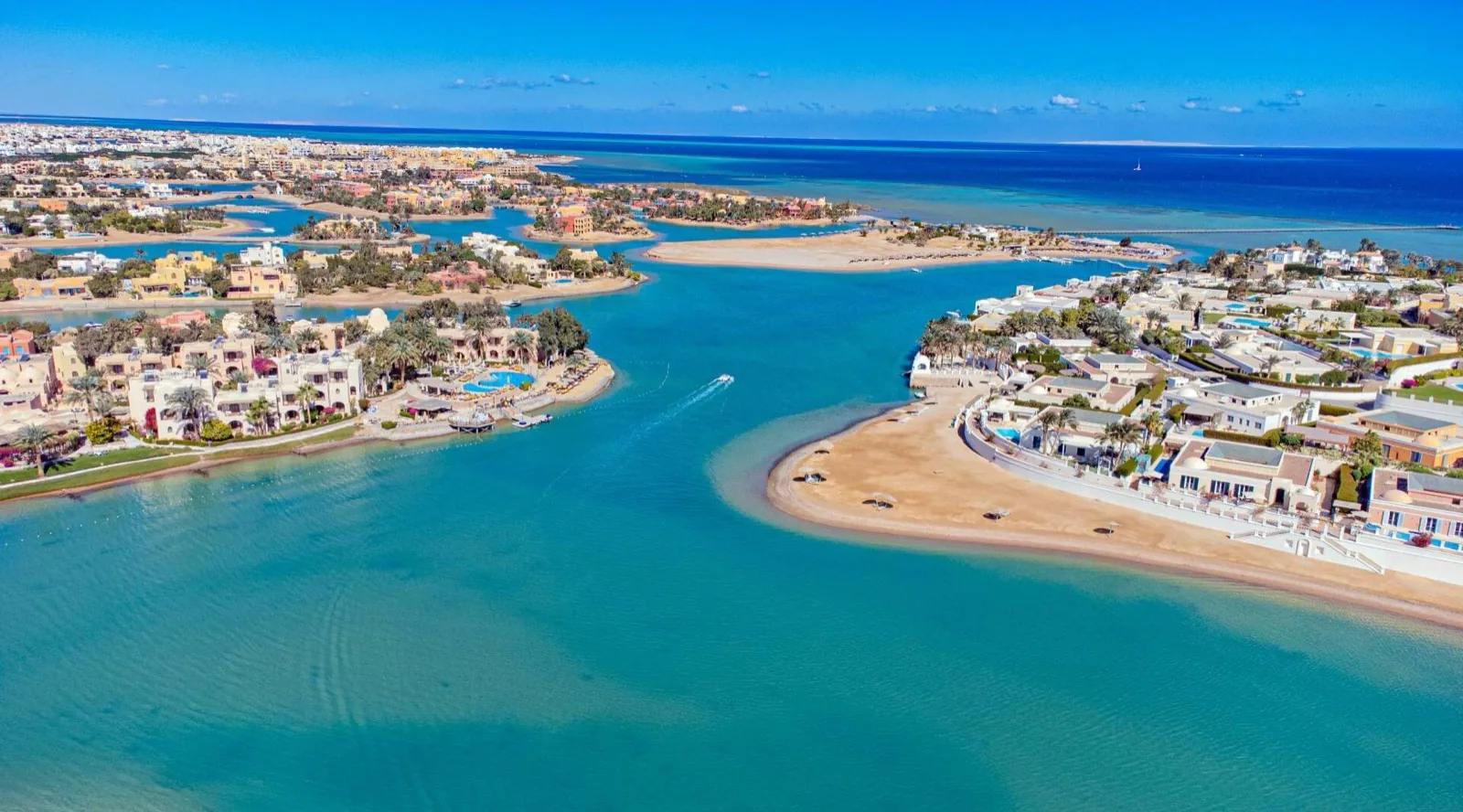
El Gouna is a town of small islands stitched together by bridges, and the whole place tilts around water, wind and salt. You dry off in the sun, you cross a footbridge, you order dinner. The trick is knowing which door to open.
These are the three we keep coming back to. We are not going to pretend to have found every table in town, only that we have found the three we would happily live next door to.
01, Abu Tig MarinaKiki's, for the vongole.
Kiki's sits on the marina, on the wooden boards where the small boats come in for the night. You order spaghetti alle vongole because that is what you order at Kiki's, and because someone once decided that clams from the Red Sea taste of both the sea they came from and the one you were probably picturing.
By your second dinner they know you. By the third they bring you a small bowl of olives you did not ask for and pour the wine before you have finished the first glass. A restaurant becomes a favourite when someone stops handing you a menu.
02, DowntownZia Amelia, for the pizza after the sea.
Zia Amelia is a Neapolitan pizza place tucked into a corner of Downtown, with a wood oven that puffs a little smoke into the street every time the door swings. The dough is soft in the middle and blistered at the edge. The tomato tastes like a tomato.
You go straight from the beach, hair still with salt in it, sandals sandy, wearing the linen shirt from the boat over your swimsuit. Nobody looks up. The waiter waves you to a table on the terrace, brings a cold bottle of water and a small carafe of house red without ceremony. It is a place designed to be arrived at, not booked.
The best restaurants in a town like this are the ones that let you look like you have been swimming, because you have.
03, Just outside townThe Bedouin place, no menu, no sign.
The third one we are going to keep vague, and you can forgive us. It is a small terrace on the sand, twenty minutes out of El Gouna in a car that will need washing after, run by a Bedouin family who cook whatever the fishermen bring them that morning.
There is no menu. There is mint tea, brought first and refilled without asking. There is a whole fish grilled over an open fire, split down the middle and served on the wooden board it was carried in on. There is warm bread and a bowl of tahini and a small dish of lemon, and somebody's uncle turning the fish with his bare hands as though the flames are not personally offensive.
You will eat too much. You will pay a small amount of money for something that took the whole day to happen. On the drive home the light will be that late Red Sea peach colour and you will already be planning tomorrow around when to go back.
That, in the end, is the whole trick. Three good tables, a walk between them, and enough salt in your hair to remember why you came.
Belvi is where places like this become trips.
See how it works